True Story Christmas Tree PNG Clipart Review
As a designer who has spent countless hours digitizing motifs and troubleshooting thread breaks, I approach every new graphic with a critical eye. We are not just looking for pretty pictures; we are looking for stitchable potential. When I first loaded True Story Christmas Tree PNG Clipart into my workspace, my immediate reaction was one of cautious optimism. This is not just another generic holiday graphic. It carries a specific visual weight and narrative quality that suggests it belongs in a curated collection rather than a bulk download folder. For embroidery designers, small business owners, and Etsy sellers, the difference between a clipart file that looks good on screen and one that translates beautifully to fabric is often the difference between a bestseller and a return.
First Impressions and Visual Personality
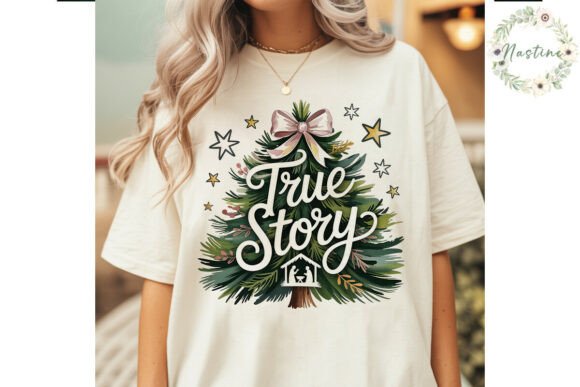
The mood of this illustration is grounded and nostalgic. Unlike the hyper-saturated, cartoonish trees that dominate many seasonal marketplaces, this design feels hand-drawn and authentic. The line work appears organic, which is a double-edged sword for us in the embroidery world. Organic lines can create beautiful texture, but they can also be a nightmare if the curves are too irregular for standard satin stitches. The layout is balanced, with a clear focal point that draws the eye upward. For a craft business owner, this visual personality signals quality. It does not scream "discount bin." Instead, it whispers "boutique handmade product," which is exactly the vibe we want to project to our customers.
When evaluating True Story Christmas Tree PNG Clipart, I look at how the shapes interact. Are there isolated islands of color that will require excessive jump stitches? Are the details fine enough to get lost in the fabric texture? From a design asset perspective, this piece holds up well. The contrast between the tree structure and any accompanying elements seems distinct, which is crucial for maintaining clarity once the needle hits the fabric.
Real-World Application: The Holiday Tote Scenario
To truly test a design, I imagine it on a specific product. Let’s consider a custom embroidered tote bag made from heavy canvas. This is a staple item for any small shop product line during the fourth quarter. If I were to use this illustration as the basis for a machine embroidery design, the boldness of the tree would stand out nicely against the textured weave of the canvas. The natural, slightly rustic feel of the clipart complements the utilitarian nature of a tote bag.
However, if I were pivoting to a sweatshirt embroidery project, the approach would change. A fleece or cotton blend sweatshirt has more give and a softer surface. Here, the details of True Story Christmas Tree PNG Clipart would need to be simplified. Thick fill stitches on a stretchy fabric can cause puckering, so I would likely convert the larger solid areas into applique design sections. Using a contrasting fabric for the tree body, outlined with a satin stitch, would reduce stitch density while keeping the visual impact high. This is a practical adjustment that saves time and improves the wearability of the finished product.
Navigating Fabric and Hoop Constraints
Not every surface is forgiving. If you are planning to use this graphic on a cap or a curved surface, you must be wary of distortion. Caps have limited hoop size options and a rigid structure. A wide, sprawling tree design might not fit within a standard 4x4 or 5x7 hoop without significant resizing, which could compromise the integrity of the small details. Always check the aspect ratio before committing to a digitizing path.
Dark fabrics present another challenge. If you are stitching this onto a navy or black garment, you cannot rely on subtle shading. You need high-contrast thread colors. I recommend testing the design in a black and white mockup first. If the silhouette of the tree loses its definition in grayscale, it will likely disappear on dark fabric. In such cases, adding a light-colored running stitch border or backing can help the design pop. For baby embroidery, where softness is paramount, you must minimize the backside stitching. A dense fill stitch can feel scratchy against sensitive skin, so consider using lighter stitch patterns or ensuring a high-quality stabilizer is used to keep the front smooth.
Commercial Viability and Brand Consistency
For the Etsy seller and creative entrepreneur, consistency is key. Your brand is built on trust and recognition. Using high-quality illustrations like True Story Christmas Tree PNG Clipart helps maintain a professional aesthetic across your printable mockup previews and actual physical goods. When a customer sees a cohesive look in your digital storefront, they are more likely to perceive the handmade product as valuable. This clipart fits seamlessly into a narrative of traditional, heartfelt holiday gifting. It works well for personalized gifts, such as monogrammed pillow covers or kitchen towels, where the tree serves as a frame or accent rather than the sole focus.
However, commercial embroidery requires diligence. Before selling finished items or digital products derived from this image, you must confirm licensing. Does the license allow for commercial use? Can you sell the digitized embroidery file itself, or only the physical stitched item? These are critical questions that determine your legal standing. Never assume a clipart is free for commercial exploitation. Check the terms explicitly. For digital product sellers, this image could be part of a larger bundle of design assets, but again, verify the redistribution rights.
Practical Designer Notes for Execution
If you decide to move forward with this design, here is my checklist for a successful embroidery project:
- Test on scrap fabric first: Never stitch directly on your final garment. Use a similar fabric weight and texture to check for puckering or thread breaks.
- Check thread color contrast: Ensure your chosen thread palette distinguishes the tree from the background and any internal details.
- Review stitch density: If digitizing yourself, avoid overly dense fill stitches in small areas to prevent needle buildup and fabric distortion.
- Confirm hoop size: Measure the design dimensions against your machine’s maximum hoop capacity, especially for larger items like blanket corners.
- Inspect small details: Tiny branches or ornaments may need to be enlarged or removed if they are smaller than the minimum stitch length your machine can handle reliably.
- Use proper stabilizer: Match the stabilizer to the fabric. Cut-away for stretchy knits, tear-away for stable wovens.
In conclusion, True Story Christmas Tree PNG Clipart offers a strong foundation for holiday-themed creations. It is not just a static image; it is a starting point for tactile art. Whether you are creating an embroidered patch for a jacket or a festive apron for a boutique, this design rewards careful consideration. By respecting the limitations of your materials and the capabilities of your machine, you can transform this illustration into a cherished keepsake. For the modern maker, it represents the perfect blend of nostalgic charm and professional potential, provided you approach it with the right technical preparation.