Review: Funny Christmas Bigfoot with Santa Hat Design
As a designer who has spent countless hours digitizing and testing machine embroidery design files, I have learned that holiday themes often fall into two categories: overly complex scenes that turn into thread nests, or simplistic clip-art styles that lack character. When I first loaded the Funny Christmas Bigfoot with Santa Hat file into my software, I was looking for that sweet spot between whimsical charm and technical stitchability. This review breaks down how this specific Illustrations style asset performs in real-world production, from the initial hoop-up to the final press.
First Impressions and Visual Personality
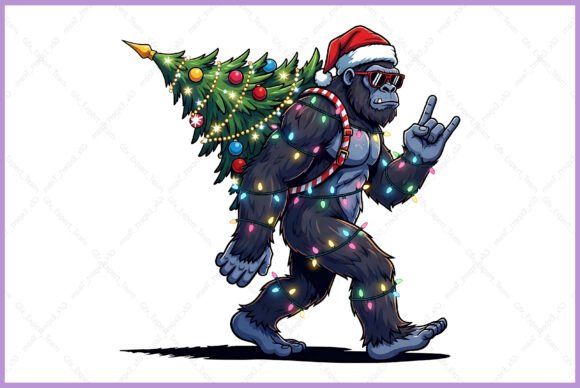
The immediate appeal of this design lies in its personality. It is not just a generic holiday motif; it carries a playful, slightly mischievous vibe that resonates well with modern craft trends. The layout balances the recognizable silhouette of Bigfoot with the classic red-and-white contrast of a Santa hat. For an embroidery project, this contrast is crucial. The shape is bold enough to be read from a distance, which is essential for items like tote bags or sweatshirts, yet it retains enough internal detail to reward closer inspection.
The mood is lighthearted and approachable. In a market saturated with traditional snowflakes and reindeer, a cryptid wearing holiday gear offers a fresh narrative. This makes it an excellent choice for customers looking for something unique rather than traditional. The visual weight is well-distributed, meaning it should not pull excessively on one side of the fabric if hooped correctly.
Real-World Application: The Custom Sweatshirt Test
To evaluate the practical utility of this embroidery file, I simulated a common client request: a custom holiday gift for a teenager who loves outdoor myths. I chose a mid-weight cotton blend sweatshirt as the test substrate. This is a popular item for Etsy sellers and small shop product lines because it offers a stable surface for stitching.
The design performed admirably on this textured fabric. The fill stitch areas in the fur texture were dense enough to cover the garment color but not so dense that they created a stiff, cardboard-like feel. This is a critical distinction for custom apparel. If the stitch density is too high, the garment becomes uncomfortable to wear. In this case, the underlay seemed sufficient to anchor the top stitches without over-compacting the fabric. The result was a soft, flexible finished product that maintained the integrity of the illustration.
Versatility Across Product Types
Beyond apparel, this design shows promise for various handmade product categories. Here is how it translates across different items:
- Tote bag design: The bold lines hold up well on canvas, making it a standout feature for reusable holiday shopping bags.
- Embroidered patch: With a proper satin stitch border, this can be cut and applied as an iron-on or sew-on patch, adding value to jackets or beanies.
- Kitchen towels: Placed on the corner of a flour sack towel, it adds a humorous touch to holiday hosting decor.
- Pillow covers: Centered on a neutral linen pillow, it serves as quirky seasonal home decor that doesn't feel overly childish.
Technical Considerations and Fabric Constraints
While the design is robust, it is not without its challenges. Experienced craft business owners know that not every fabric behaves the same. When working with stretchy materials like jersey knits for baby embroidery or t-shirts, stabilization is non-negotiable. I recommend using a cut-away stabilizer for garments that will undergo frequent washing, as this prevents the design from puckering over time.
For curved surfaces, such as caps or hats, caution is advised. The width of the Bigfoot figure may exceed the standard 4x4 inch hoop capacity depending on the specific digitization scale. If you are attempting this on a cap, ensure you check the dimensions against your machine's maximum hoop size. Additionally, the detailed fur texture might lose clarity on highly textured fabrics like terry cloth or thick fleece. In those cases, simplifying the thread palette or increasing the contrast between the thread colors can help maintain definition.
Dark fabrics present another consideration. If stitching on black or navy, ensure the design includes adequate light-colored threads for the face and highlights. Without proper color planning, the details can get lost in the shadows. Always run a test stitch on scrap fabric of the same type and color before committing to the final commercial embroidery run.
Enhancing Brand Value and Customer Trust
From a business perspective, the quality of your design assets directly impacts perceived value. A clean, well-digitized design like this one signals professionalism. When customers see crisp edges and consistent tension in your personalized gift items, they are more likely to trust your brand for future purchases. This design’s unique theme also aids in social media engagement. It is the kind of image that stops the scroll, encouraging shares and comments, which is vital for digital product sellers and boutique brands alike.
Using this in a printable mockup for your online store can help visualize the end result for buyers who cannot touch the product. Showcasing the design on multiple items, such as a mug wrap or a onesie, demonstrates versatility and inspires customers to imagine how they might use it.
Practical Notes for Designers and Makers
Before integrating Funny Christmas Bigfoot with Santa Hat into your production workflow, consider these final checks:
- Verify Licensing: Confirm whether the license allows for commercial use if you plan to sell finished physical items. Rules vary by creator.
- Check File Formats: Ensure the digital embroidery file is compatible with your specific machine brand (e.g., PES, DST, JEF).
- Test Stitch Out: Always stitch a sample on similar fabric to check for thread breaks or nesting.
- Contrast Check: View the design in black and white to ensure the shapes are distinct without color reliance.
- Stabilizer Choice: Match your stabilizer to the fabric weight. Tear-away for stable woven fabrics, cut-away for knits.
In conclusion, this design offers a strong balance of fun and function. It is a viable option for holiday embroidery projects that need to stand out in a crowded market. By respecting the technical limits of your machine and fabric, you can produce high-quality items that delight customers and enhance your portfolio.