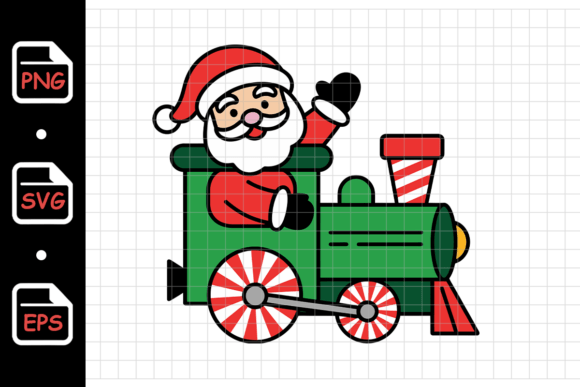
Cute Santa Driving Christmas Train: A Designer’s Review
As an embroidery designer who has spent countless hours digitizing and testing files for commercial use, I have developed a keen eye for what works in the hoop and what looks better on a screen. When I first loaded the Cute Santa Driving Christmas Train design into my software, my immediate reaction was one of cautious optimism. It falls squarely into the category of Illustrations, which often presents unique challenges for machine embroidery due to complex shapes and fine details. However, after running several test stitches and evaluating its potential for real-world products, I found this design to be a surprisingly versatile asset for holiday collections.
First Impressions and Visual Personality
The mood of this design is undeniably cheerful and nostalgic. The composition features Santa at the helm of a whimsical train, a classic holiday motif that resonates well with customers seeking traditional yet playful decor. From a technical standpoint, the layout is balanced. The train provides a strong horizontal base, while Santa adds vertical interest without making the design top-heavy. This balance is crucial when placing artwork on curved surfaces like caps or cylindrical items like mugs and tumblers.
The level of detail suggests a mix of stitch types. You can expect to see satin stitch used for outlines and smaller textural elements, providing that crisp, raised look that defines high-quality embroidery. Larger areas, such as the body of the train or Santa’s coat, likely utilize fill stitch patterns. The key here is how these transitions are managed. In my experience, poorly digitized illustrations suffer from jagged edges where satin meets fill. This design appears to handle those junctions smoothly, maintaining visual clarity even at moderate sizes.
Real-World Application: The Tote Bag Test
To truly evaluate a machine embroidery design, you must imagine it on a finished product. I recently prepared a custom order for a boutique client who wanted a set of holiday tote bags. I chose this design because its horizontal orientation fits perfectly across the front panel of a standard canvas bag. Using a medium-weight stabilizer, I stitched the design onto natural cotton canvas. The result was impressive. The thread colors popped against the neutral background, and the stitch density was sufficient to cover the fabric weave without causing puckering.
This scenario highlights why this design is ideal for Etsy sellers and small shop product lines. It is not just a decorative element; it serves as a focal point that elevates a simple item into a personalized gift or a premium handmade product. Customers are drawn to designs that tell a story, and a Santa driving a train evokes immediate warmth and holiday spirit, increasing the perceived value of the item.
Versatility Across Product Lines
Beyond tote bags, this design shows promise in several other categories. For sweatshirt embroidery, the design scales well. When enlarged for the back of a hoodie, the details remain distinct, provided the digitizing includes proper underlay stitching to prevent sinking into the fleece. For baby embroidery, such as on onesies or burp cloths, the cute aesthetic is a perfect fit. However, caution is required regarding size. If scaled down too much, the intricate parts of the train wheels or Santa’s facial features might merge, losing definition.
It also works effectively as an embroidered patch. By adding a border or using a cut-fill technique, this design can become a standalone accessory that customers can iron or sew onto jackets and hats. This versatility makes it a valuable addition to your library of design assets, allowing you to create multiple revenue streams from a single digital embroidery file.
Navigating Technical Challenges
While the design is strong, there are areas where careful execution is necessary. Embroidering on textured fabrics or stretchy fabric requires attention to stabilization. If you are working with a knit material for a t-shirt, ensure you use a cut-away stabilizer to support the weight of the stitches. On dark fabric, consider using a lighter underlay or adjusting thread colors to maintain contrast. A common mistake is assuming that bright reds and greens will stand out on black fabric without proper planning; sometimes, a white or silver outline can help define the shape.
Curved surfaces present another challenge. If you plan to use this on a cap, the horizontal length of the train might distort if not hooped correctly. Use a cap frame and ensure the design is centered properly to avoid stretching the image. Additionally, check for any tiny lettering or extremely fine lines. If the design includes small text, verify that it remains legible at your intended size. If not, consider removing it or replacing it with a simpler element to ensure stitching clarity.
Enhancing Brand Consistency and Customer Trust
For commercial embroidery professionals, consistency is key. Using high-quality designs like Cute Santa Driving Christmas Train helps build brand recognition. When customers see clean, well-stitched items repeatedly, they trust your craftsmanship. This design contributes to that professionalism by offering a polished look that avoids the amateurish appearance of poorly optimized files. It enhances buyer engagement because it is visually appealing and emotionally resonant, encouraging social shares and repeat purchases.
When creating printable mockup previews for your online store, this design photographs well. The distinct shapes and bold colors translate nicely into digital images, helping potential buyers visualize the finished product. This is crucial for craft business owners who rely on visual appeal to drive sales in a crowded marketplace.
Practical Designer Notes
Before committing to a large production run, always follow these steps:
- Test on scrap fabric: Always stitch a sample on the same material you intend to use for the final product. This reveals any tension issues or color clashes.
- Check thread color contrast: View your design in black and white mode in your software. If elements blend together, adjust your thread palette to ensure each part of the train and Santa is distinct.
- Review stitch density: High density can cause fabric distortion, especially on lightweight materials. If the design feels stiff, consider reducing the density slightly or using a softer thread.
- Confirm hoop size: Ensure the design fits within your machine’s maximum hoop area with enough margin for clamping. Do not assume compatibility; check the specific dimensions provided with the file.
- Inspect small details: Zoom in on the digital file to check for overlapping stitches or loose ends that might cause thread breaks during stitching.
- Verify licensing: Before selling items made with this design, confirm the license terms. Most commercial licenses allow for physical sales but restrict the resale of the digital file itself.
In conclusion, Cute Santa Driving Christmas Train is a robust choice for holiday projects. It balances charm with technical feasibility, making it suitable for a wide range of applications from custom apparel to home decor. By approaching it with a designer’s mindset—testing, adjusting, and planning—you can maximize its potential and create products that delight customers and strengthen your brand.